

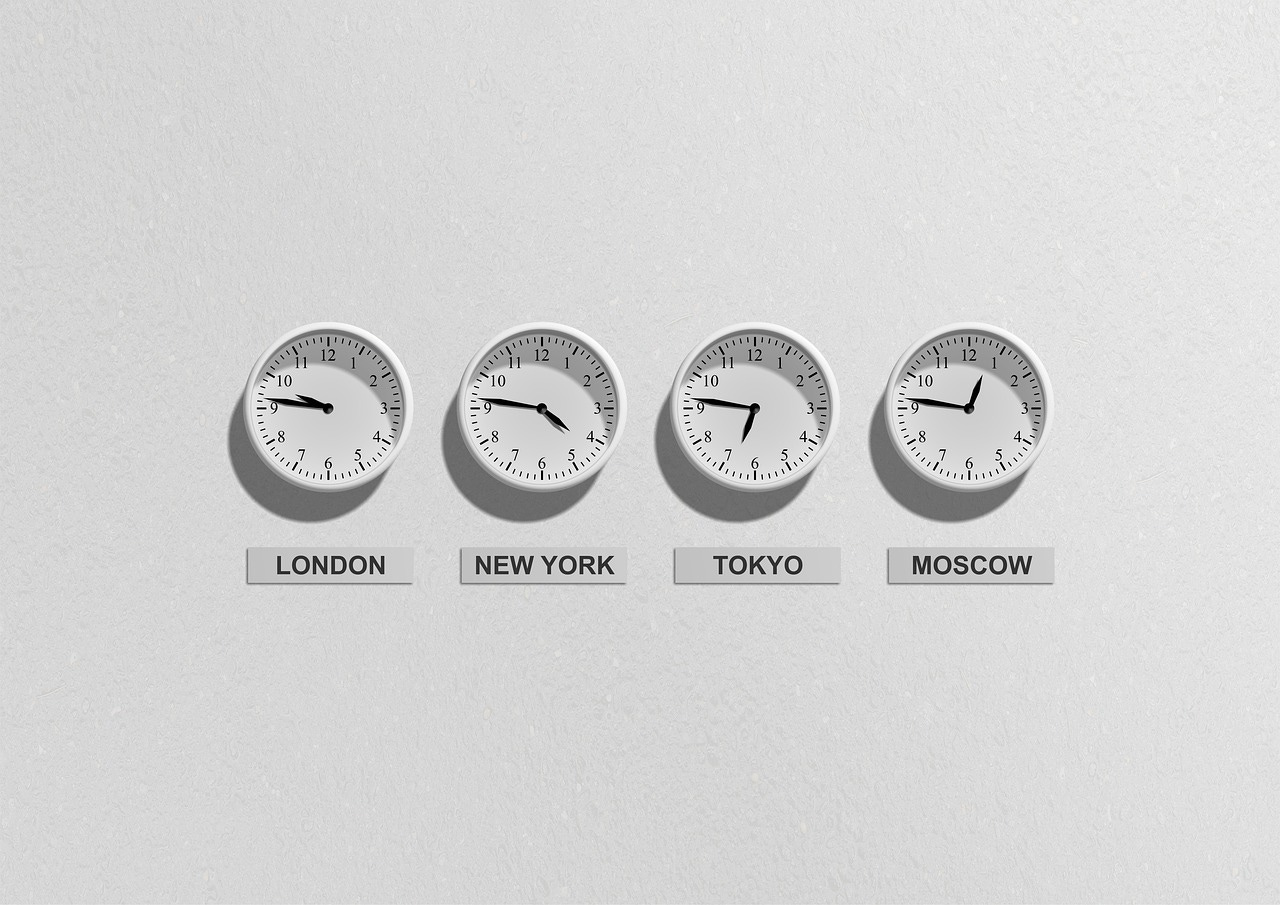
This working paper investigates how a lightweight, API-based service for timezone and city lookup can serve as an experimental infrastructure for reasoning about time, geography, and temporal boundaries in distributed systems. Rather than addressing timekeeping accuracy or proposing a universal timezone solution, the paper explores how constrained geospatial abstractions—such as region bounding boxes, proximity queries, and UTC offsets—can be operationalized through a simple HTTP interface.
The investigation is applied and exploratory in nature. It examines a FastAPI microservice that exposes timezone regions, cities, and spatial relationships through authenticated endpoints, focusing on design choices that prioritize clarity, inspectability, and ease of experimentation over completeness or real-time guarantees. The paper does not attempt to generalize findings across all temporal systems, nor does it evaluate performance or correctness against authoritative timezone databases.
As a working paper, this document presents observations derived from the current implementation rather than finalized conclusions. It frames questions about how developers and analysts reason about timezones when given simplified but explicit models, and how such models can support learning, prototyping, and exploratory analysis. The goal is to prepare the reader to think critically about temporal abstractions in software systems, not to prescribe a definitive solution.
General Information
Motivation
Timezones are a persistent source of complexity in distributed systems, analytics pipelines, and user-facing applications. Despite extensive documentation and standardized databases, errors related to offsets, daylight saving time, and geographic boundaries remain common. The motivation behind this investigation is to explore whether a deliberately simplified, query-oriented API can make temporal reasoning more explicit and approachable for practitioners.
The Timestamp API was designed as a public utility rather than a production-grade service. Its purpose is to provide a concrete, inspectable layer through which users can explore how time, location, and regional boundaries interact, without embedding complex timezone logic directly into each application.
Scope and assumptions
This work focuses on static timezone regions, city metadata, and geospatial proximity queries derived from predefined datasets. It assumes that timezone boundaries can be approximated through region groupings and bounding boxes, and that users are aware of the limitations inherent in such approximations.
The API is treated as an exploratory interface. It assumes moderate, non-adversarial usage and does not guarantee real-time correctness with respect to political or legal changes in timezone definitions.
Non-goals
This paper does not aim to replace authoritative timezone libraries, provide historical timezone transitions, or guarantee legal or calendrical accuracy. It does not address leap seconds, historical boundary changes, or fine-grained polygon-based timezone mapping. High availability, performance benchmarking, and production hardening are explicitly out of scope.
Status of the investigation
The system is considered experimental. Endpoints, data representations, and assumptions may change without notice. Observations reflect the current state of the implementation rather than a stable or finalized design.
Sections
Background and related context
Handling time correctly has long been recognized as one of the hardest problems in software engineering. Traditional approaches rely on comprehensive libraries that abstract away complexity but often obscure underlying assumptions. In contrast, exposing time-related data through explicit queries can surface those assumptions and make trade-offs more visible to users.
APIs that combine geospatial queries with timezone metadata occupy an intermediate space between raw libraries and fully managed time services. They offer structure without complete encapsulation.
Conceptual model
The Timestamp API is built around a simple conceptual model: timezones are represented as regions with approximate geographic bounds, and cities are treated as points with associated UTC offsets and DST flags. Queries operate over this model to answer questions such as which region contains a coordinate, which cities are nearest to a point, or which locations share a given offset.
FastAPI provides the HTTP interface layer, while API key enforcement defines a clear boundary between public visibility and controlled access. The open /status endpoint serves as a minimal liveness indicator, reinforcing the distinction between operational health and data correctness.
Querying time through space
A central observation from the implementation is that many timezone-related questions are inherently spatial. By framing time queries as geospatial operations—nearest city, region containment, radius-based search—the API encourages users to reason about time as a property attached to location rather than as an abstract offset alone.
This approach simplifies certain classes of questions while deliberately excluding others. Precision is traded for conceptual clarity.
Observations and limitations
Several limitations emerge from this design. Bounding boxes do not accurately represent irregular timezone borders, and DST status may change independently of geographic position. However, these constraints are visible rather than hidden, allowing users to reason about error margins explicitly.
The uniform requirement for API keys highlights access control as part of the experimental surface, while the lack of persistence or caching emphasizes stateless interaction. Rather than solving all timezone problems, the API exposes a controlled subset that can be interrogated and questioned.
Status & Next Steps
This work is currently exploratory and applied. Open questions include how users interpret approximate timezone regions, how such APIs influence error rates in downstream systems, and whether explicit uncertainty improves or hinders adoption.
Possible future directions include comparing bounding-box approaches with polygon-based models, introducing temporal versioning, and studying how developers misuse or overtrust timezone abstractions. These questions remain intentionally open, reinforcing the role of this API as a laboratory rather than a definitive solution.
Bibliographic References
Eggert, P.; Olson, A. The IANA Time Zone Database. IANA, Documentation.
Fielding, R. Architectural Styles and the Design of Network-based Software Architectures. Doctoral Dissertation, 2000.
Kleppmann, M. Designing Data-Intensive Applications. O’Reilly Media, 2017.
Python Software Foundation. zoneinfo — IANA Time Zone Support., Python Documentation, 2023.
Postel, J. Robustness Principle. RFC 793, 1981.