

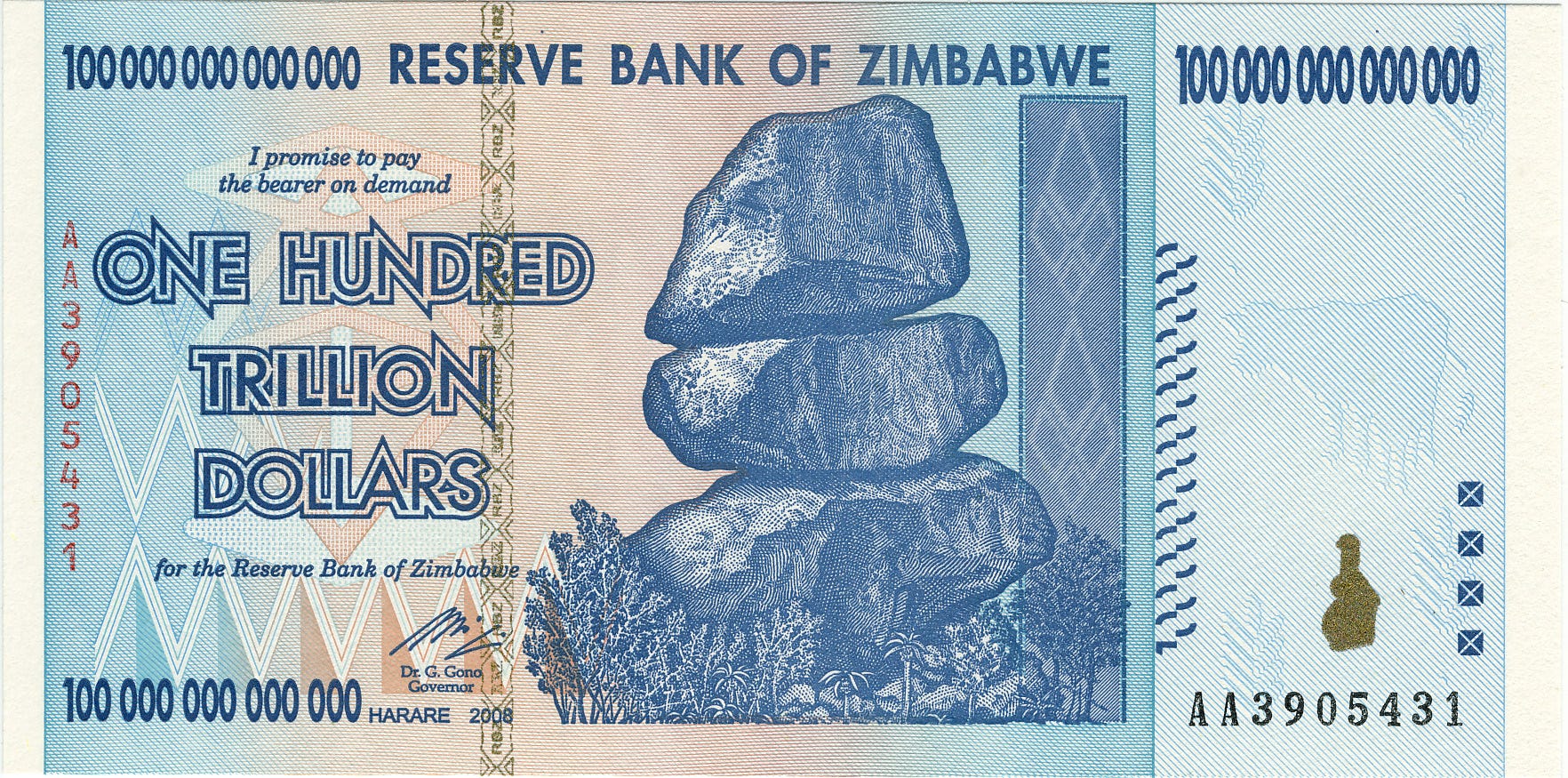
Throughout history, every major economic shift has been driven by a new way of storing, transferring, and multiplying value. The transition from gold to fiat currency did not occur because paper was inherently more valuable, but because it was more efficient and scalable. Today, a similar transformation is underway: data has become the dominant currency of the digital economy.
Companies such as Google, Meta, Amazon, TikTok, and OpenAI function as modern central banks of information. Instead of accumulating physical assets, they accumulate data—collecting, refining, analyzing, and monetizing it at scale. The creative economy produces content, interactions, and experiences, and the information economy converts those signals into economic value through algorithms, prediction, and personalization. In this cycle, precision becomes the new foundation of trust, just as purity once defined the value of gold. And just as unstable currencies destabilize entire nations, inaccurate data undermines any business built on intelligence.
In the 21st century, information is not simply an input—it is the marketplace, the infrastructure, and the product. Accuracy is what separates insight from noise, value from waste, and intelligence from illusion.
The Usual Response: More Data, Not Better Data
Faced with the explosion of digital signals, most organizations adopt a naive strategy: they collect everything. They store logs from every request, metrics from every service, traces from every application, and behavioral exhaust from every user—without curation, purpose, or governance. The logic seems intuitive: “the more data we store, the better.” But the result is the informational equivalent of monetary inflation.
When data grows without discipline, its relative value declines. Companies begin to struggle with contradictory reports, unreliable metrics, biased models, rising cloud costs, and operational slowdowns. The organization suffocates under the weight of its own excess. It mirrors economies that attempt to solve their problems by printing more money, forgetting that volume does not create value—quality does.
Instead of building a data-rich environment, these companies build a data-saturated one. And saturation breeds confusion, inefficiency, and poor decision-making.
How It Should Be Resolved: Accuracy as the New Value Standard
If fiat currency relies on institutional stability and trust, data currency relies on accuracy, governance, and context. The data economy does not reward companies that collect more—it rewards those that curate better. Solving this challenge requires automation, structure, and a shift in mindset.
First, organizations must adopt automated data curation systems that function like a central bank for information. These systems continuously validate, reconcile, and refine data to prevent informational inflation. They detect anomalies, repair inconsistencies, eliminate duplicates, and preserve semantic integrity. Just as monetary policy prevents the degradation of currency, automated data governance prevents the degradation of informational value.
Second, data must flow through an operational infrastructure as reliable as a financial system. DataOps practices—observability, versioning, traceability, and continuous governance—ensure that information moves safely and predictably across teams and systems. In this model, pipelines become the highways of the data economy, enabling the safe and auditable circulation of information.
Third, artificial intelligence becomes the real-time auditor of the data economy. AI can analyze massive datasets instantly, identify hidden patterns, detect errors before they propagate, and suggest corrections based on historical behavior. It functions as an intelligent anti-fraud mechanism, ensuring that the “currency” feeding decision-making systems remains trustworthy.
Finally, data must be treated as a product, not as operational residue. Every dataset requires ownership, purpose, quality contracts, documentation, and a lifecycle. Just as money demands authenticity and provenance, data demands precision and intention. This shift—known as Data Product Thinking—turns information into a strategic asset rather than an accidental byproduct.
Conclusion: Precision Is the New Gold Standard
The economy of the 21st century is not powered by land, machines, or industrial capacity, but by accurate, contextual, and actionable information. Modern companies no longer compete for physical resources; they compete for signal, insight, and meaning. In this environment, data is the currency—but precision is the gold standard.
Artificial intelligence acts as the regulator and accelerator of this new financial-like ecosystem, while data engineers and strategists become the architects who design its stability. Just as nations collapse when their currency loses value, organizations collapse when their data loses reliability. The future belongs to those who can protect, validate, and enrich their most valuable asset: precise information.
References
Davenport, T. H.; Prusak, L. Information Ecology: Mastering the Information and Knowledge Environment. Oxford University Press, 1997.
Shapiro, C.; Varian, H. R. Information Rules: A Strategic Guide to the Network Economy. Harvard Business School Press, 1999.
Mayer-Schönberger, V.; Cukier, K. Big Data: A Revolution That Will Transform How We Live, Work, and Think. Eamon Dolan/Houghton Mifflin Harcourt, 2013.
Davenport, T.; Redman, T. Data’s New Role in the Age of Automation. Harvard Business Review, 2021.
Martin, J. Designing Data-Intensive Applications. O’Reilly Media, 2017.
This piece realy made me think, your comparison of data to currency and the 'informational inflation' problem is spot on, really sharp. Given how algorithms dictate so much, do you think we also need to redefine what trust means beyond just precision, perhaps including interpretability or fairness metrics?